
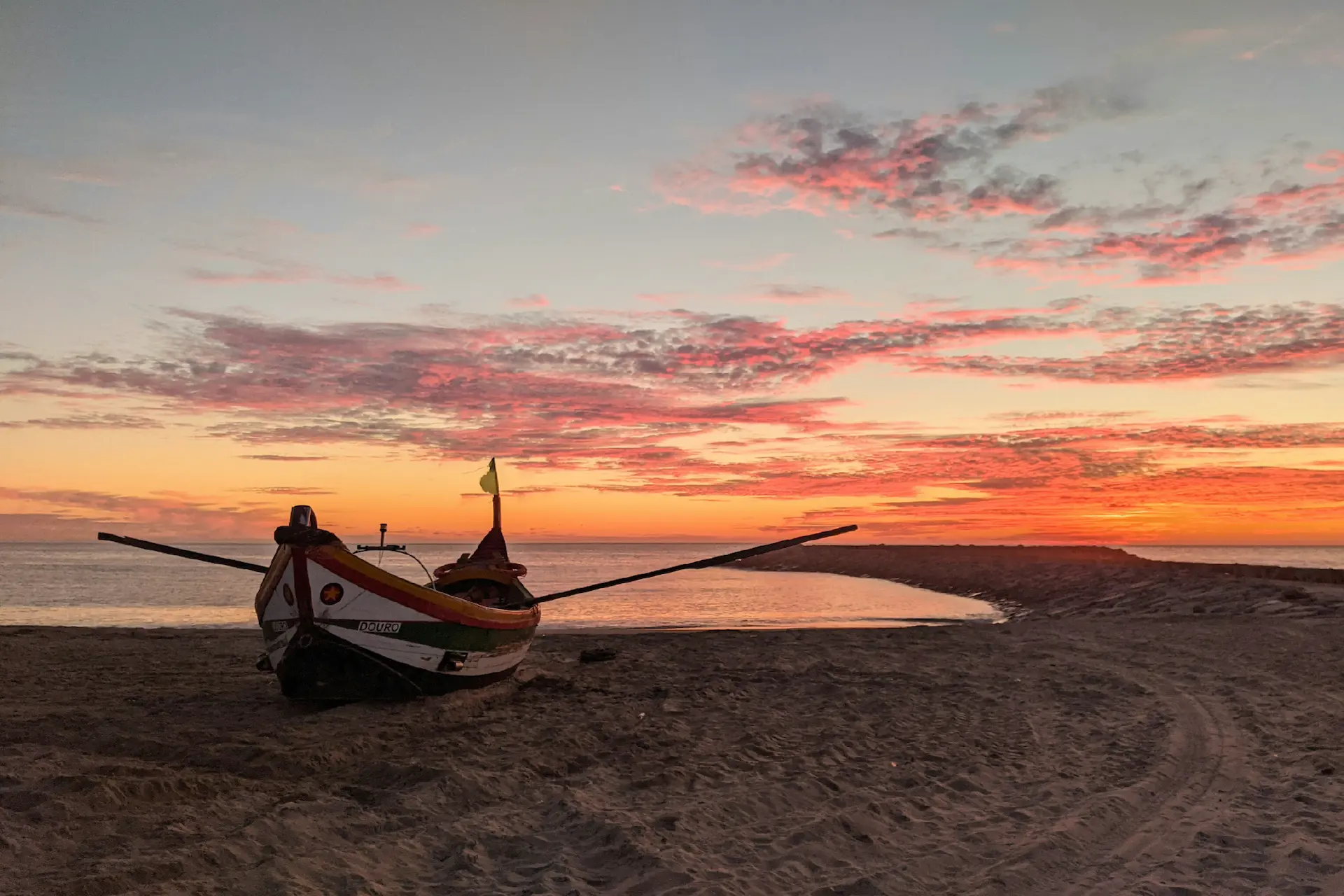
Portugal is a country facing the sea. Along 943 km of mainland coastline, the presence of the Atlantic has shaped its identity, its history, and its way of life. From the fertile plains of Minho, through the dramatic cliffs of Nazaré and Sintra, to the golden beaches and warm waters of Algarve, each piece of the coastline tells its own story, where geography intertwines with collective memory and local traditions.
Portugal’s coast is not just a summer destination: it is a journey through time and culture. On every beach, we find evidence of the Age of Discovery, fishing life, popular folklore, and how communities have adapted to the sea and Atlantic winds. Towns such as Caminha, Nazaré, Ericeira, Porto Covo, Tavira, and Aljezur hold memories of navigators, fishermen, and artisans, while large coastal cities such as Porto, Lisbon, and Faro connect the modern with historical heritage.
From a natural perspective, the diversity is impressive: lagoon systems such as Ria de Aveiro and Ria Formosa, limestone cliffs and caves carved by the waves, wild beaches of schist and quartzite, estuaries that are sanctuaries for migratory birds, shifting dunes and fossils, barrier islands, and sandy peninsulas that change shape with the tides. This ecological richness has transformed much of the Portuguese coast into protected areas, such as the Southwest Alentejo and Vicentine Coast Natural Park, the São Jacinto Dunes Nature Reserve, and the Sintra-Cascais Natural Park.
The connection to the sea is also expressed in the cuisine, with dishes that reflect the abundance of fish and seafood: grilled sardines, fish and seafood stews, barnacles, cataplanas, always accompanied by regional wines, from the fresh Vinho Verde to the warm Alentejo varieties. Popular festivals, such as Senhora da Agonia in Viana do Castelo, the marches in Lisbon, the devotion to Senhora da Nazaré, or the summer festivals in Alentejo and Algarve, show how maritime culture is still alive.
Get ready to dive into Portugal’s coast, where nature, history, culture, and adventure meet. Whether you want to feel the adrenaline rush of giant waves, hike along cliff trails, taste fresh fish at local markets, or just relax in a hidden cove, Portugal offers a coastline of contrasts, but united by the same infinite blue horizon.
North Coast of Portugal (Portuguese Green Coast) - from Caminha to Espinho
The North Coast of Portugal, also known as the Green Coast of Portugal, is a region where the Atlantic meets mighty rivers and deeply rooted traditions. Here, the sea has shaped the landscape and communities, creating a territory of extensive sandy beaches, small rocky coves, and estuaries rich in biodiversity. Granite and schist predominate in the soft terrain, where mountains such as Arga rise up and the coastline is protected by dunes and pine forests.
Historically, this coastline was a gateway for ideas and trade from Northern Europe. Cities such as Viana do Castelo and Porto played crucial roles in Portuguese maritime expansion, shipbuilding, and the transport of Port wine along the Douro River. Culturally, the region lives to the rhythm of pilgrimages, such as the Senhora da Agonia festivals, and maintains traditions such as Minho embroidery, folk dance groups, and cuisine based on fresh fish, octopus, cod, and vinho verde.
Praia da Foz do Minho – The northernmost beach in Portugal
Located at the mouth of the Minho River, near the border with Galicia, this beach combines sea and river, with a calm water area, ideal for families and nautical activities. It is flanked by the Mata Nacional do Camarido, a dense pine forest that protects the dunes. The Ínsua Fort is visible from the beach and the Monte de Santa Tecla dominates the Galician landscape opposite.
Historically linked to fishing and the harvesting of local flora, the beach is now popular for walking and sports such as kayaking and sailing.
Moledo Beach – Wide landscape facing the mouth of the Minho River
Located in Caminha, Moledo Beach combines sea, river, and mountains in a unique landscape. Its extensive sandy beach, with strong north winds, is ideal for kitesurfing and windsurfing. Opposite is the island of Ínsua, where the 17th-century Ínsua Fort and an old Franciscan convent bear witness to the region’s history.
In the 20th century, Moledo became a destination for Portuguese cultural and political elites, maintaining a distinctive and peaceful image to this day.
Matosinhos Beach – Urban surfing in the north
Located in the metropolitan area of Porto, Matosinhos Beach is one of the main urban areas in the country. The artificial breakwater protects part of the beach, creating calmer conditions for swimming and water sports. Matosinhos has a long tradition of fishing and canning, visible in the local market and the numerous grilled fish restaurants. Today, it is an urban surfing hub, with several schools and sporting events, integrating itself into the cultural and gastronomic life of Porto.
Unique characteristics of the Green Coast of Portugal
- A mixture of sea and river, with important estuaries (Minho, Lima, Douro).
- Landscape marked by granite, schist, dunes, and pine forests.
- Strong maritime and religious identity, with pilgrimages and traditional costumes.
- Fish and seafood cuisine, accompanied by vinho verde.
Discover more about the north of Portugal
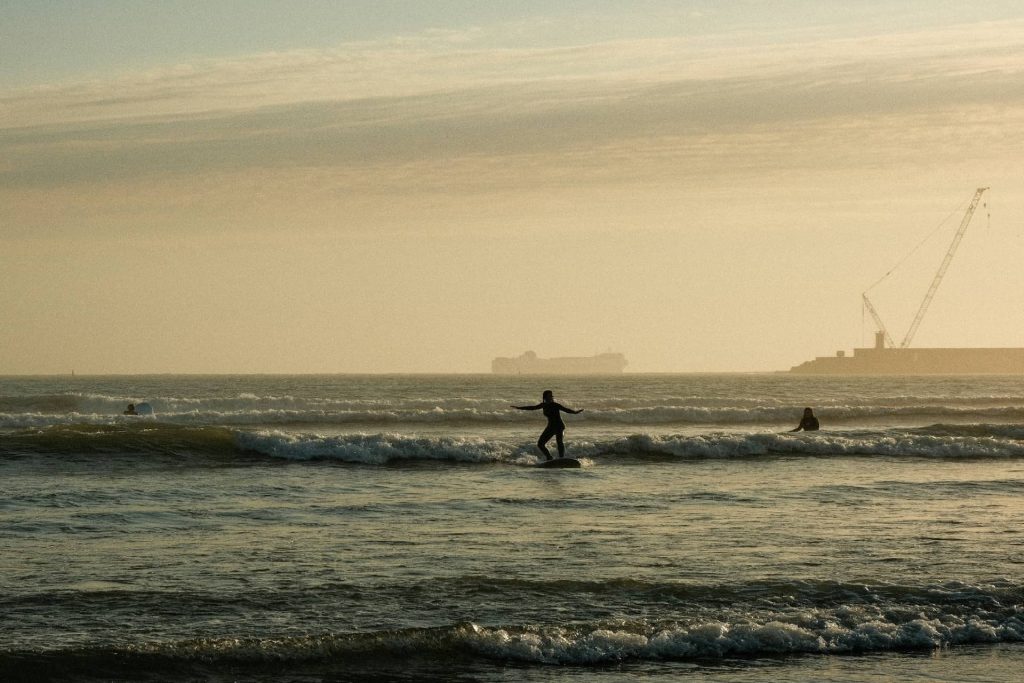
Central Coast (Portuguese Silver Coast) - from Aveiro to Peniche
The Central Coast of Portugal (Silver Coast) is a land of contrasts: imposing limestone cliffs, long sandy beaches, shifting dunes, and unique lagoon systems, such as the Ria de Aveiro. It is in this region that you will find the Nazaré Canyon, responsible for the biggest surfable waves in the world.
Historically, Aveiro stood out for its salt production and fishing, while Nazaré and Peniche were resilient fishing villages, shaped by the Atlantic weather. Culturally, the region is distinguished by the moliceiro boats of the Ria de Aveiro, the colorful “palheiros” of Costa Nova, or the devotion to Senhora da Nazaré. The cuisine combines grilled fish, fresh seafood, and conventual sweets, such as “ovos moles”.
Costa Nova Beach – Colorful houses and connection to the Ria de Aveiro
Between the Atlantic and the Ria de Aveiro, Costa Nova is known for its colorful striped “palheiros”, which evolved from fishermen’s warehouses to summer homes.
The windy beach is ideal for surfing and kitesurfing, while the estuary offers calm waters for sailing and kayaking. The gastronomic tradition includes seafood and the typical sweet “tripa.”
Cabedelo Beach (Figueira da Foz) – Preserved dunes and wind sports
On the south bank of the Mondego estuary, Cabedelo stands out for its well-preserved dune system, stabilized by vegetation adapted to salt and sand mobility.
With constant winds, it is one of the best places in the country for kitesurfing and windsurfing, as well as surfing and bodyboarding. Recent redevelopment projects have included walkways and the restoration of native vegetation.
Praia da Nazaré – World icon of big wave surfing
Located in the village of the same name, Praia da Nazaré is famous for the Submarine Canyon, a deep tectonic fault that amplifies Atlantic swells, creating colossal waves.
The legend of Senhora da Nazaré and the Sanctuary on the site mark the religious identity of the village, while Praia do Norte has become a global destination for surfers such as Garrett McNamara. The Fort of São Miguel Arcanjo serves as an interpretive center for the phenomenon of giant waves.
Unique attributes of the Portuguese Silver Coast
- Canhão da Nazaré – a geological phenomenon unique in the world.
- Ria de Aveiro – a lagoon system of great ecological and cultural importance.
- Alternating long sandy beaches, shifting dunes, and limestone cliffs.
- Traditions linked to fishing, salt farming, and religious devotions.
Discover more about the center of Portugal
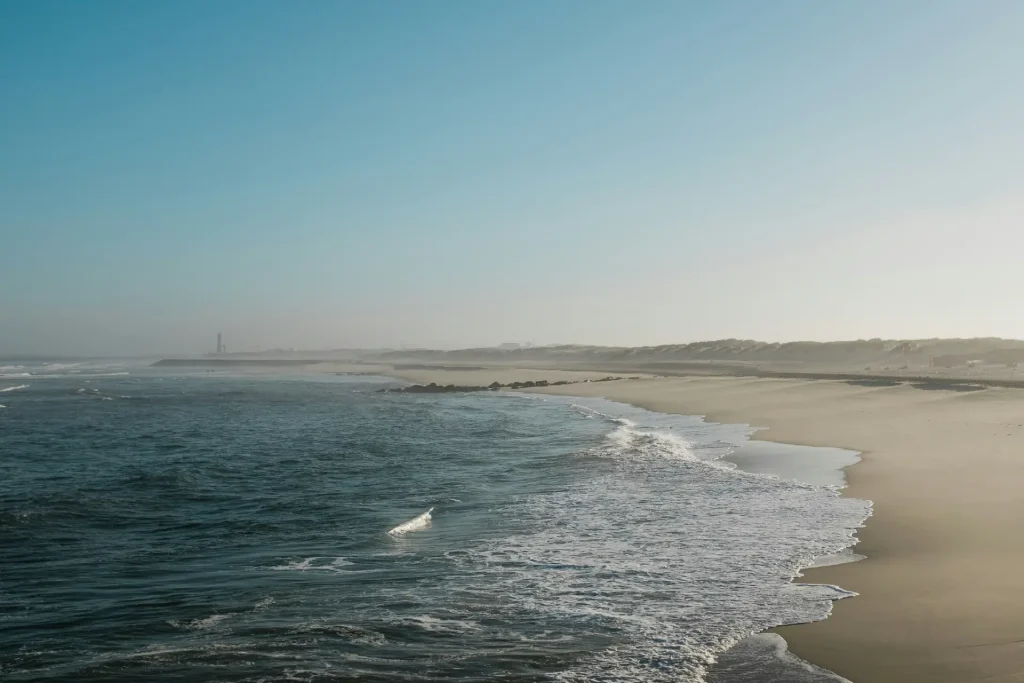
Greater Lisbon and the Sintra Coast - from Ericeira to Caparica
The Greater Lisbon coastline is one of the most urbanized, but also one of the most diverse in terms of landscape. It alternates between steep cliffs, fossil dunes, jagged coves, and iconic urban beaches. The proximity of the Sintra Mountains creates dramatic scenery, where the mountainous terrain meets the Atlantic.
Historically, Lisbon and Cascais were centers of Portuguese navigation and places of aristocratic leisure in the 19th century. Ericeira is a World Surfing Reserve, and beaches such as Carcavelos and Guincho are now icons of urban and international surfing. The culture mixes tradition and cosmopolitanism, from popular festivals to seafood restaurants and Lisbon’s vibrant nightlife.
Guincho Beach – Wild, windy, and with shifting dunes
Located in the Sintra-Cascais Natural Park, Guincho is known for its wild landscape, shifting dunes, and strong winds, making it a prime destination for surfing, windsurfing, and kitesurfing.
The Guincho-Cresmina system is an area of great ecological value, with vegetation resistant to sand mobility and environmental recovery projects. The beach has been the setting for international events and even films, such as “007 – On Her Majesty’s Secret Service.”
Praia do Magoito – Imposing cliffs and fossil dunes
Located on the coast of Sintra, Praia do Magoito stands out for its fossil dunes, which are around 10,000 years old and a true geomonument of coastal evolution.
The steep cliffs and strong sea make it popular for surfing and bodyboarding. Culturally, it maintains local traditions such as mussel harvesting on Good Friday. The waters are rich in iodine and have a therapeutic reputation.
Carcavelos Beach – The largest beach on the Cascais Line
With about 1.5 km of flat, extensive sand, Carcavelos is one of the most popular beaches in the Lisbon region.
It was one of the first seaside destinations for the Lisbon elite in the 19th century, linked to the famous Carcavelos wine. Today it is an epicenter of urban surfing and the stage for championships, as well as activities such as volleyball and beach soccer. The São Julião da Barra Fort is a historic landmark next to the beach.
Unique characteristics of Greater Lisbon and the Sintra Coast
- Quartzite and limestone cliffs, fossil dunes, and jagged coves.
- Historical heritage by the sea (forts and fishing traditions).
- Strong cultural connection between urban leisure, surfing, and seafood cuisine.
- Protected areas such as the Sintra-Cascais Natural Park.
Discover more about Lisbon and the surrounding areas

Alentejo’s Coast (Vicentine Coast)- from Comporta to Odeceixe
Alentejo’s coast is one of the wildest and most unspoiled coastal areas in Portugal. Mostly part of the Southwest Alentejo and Vicentine Coast Natural Park, it combines steep cliffs, secluded beaches, extensive dune systems, and estuaries rich in biodiversity (Sado and Mira rivers).
Historically, this coast has had a low population density, with communities linked to artisanal fishing and subsistence agriculture. Today, it represents a balance between tradition, environmental conservation, and nature tourism, with a focus on the protection of the natural environment and the sustainable development of tourism.
Historically, this coast has remained sparsely populated, with communities linked to artisanal fishing and subsistence agriculture. Today, it represents a balance between tradition, environmental conservation, and nature tourism, with the Rota Vicentina, a walking trail connecting villages, coves, and coastal viewpoints, being a particular highlight.
The cuisine blends flavors from the sea and the countryside: seafood açorda, grilled fish, octopus, barnacles, regional cheeses, and wines.
Zambujeira do Mar Beach – Enchanting and cliffside
Located in São Teotónio (Odemira), it is one of the most emblematic beaches in the region. Set in a cove at the bottom of high cliffs, it offers unique panoramic views.
Part of the Natura 2000 network, it is home to seabirds such as the crested cormorant and the white stork, which nests on coastal cliffs – a rare phenomenon in Europe.
Zambujeira retains the charm of a fishing village and is close to the Festival do Sudoeste, one of the biggest music events in the country.
Praia do Malhão – Wild and extensive
Between Vila Nova de Milfontes and Porto Covo, Praia do Malhão is known for its well-preserved dune system and rocky cliffs that create small coves.
With sandy areas separated by rock formations, it offers more secluded areas. It is very popular with surfers and hikers on the Rota Vicentina.
Praia de Odeceixe – Where the river meets the sea
At the mouth of the Ribeira de Seixe, which separates the Alentejo from the Algarve, Praia de Odeceixe is unique in combining river and sea areas.
The river part, with calm waters, is ideal for families, kayaking, and paddleboarding. The sea area is perfect for surfing and bodyboarding.
The village of Odeceixe maintains traditional architecture and cuisine based on fresh fish, seafood, and local products.
Unique attributes of the Alentejo coast
- Preserved landscape with schist cliffs, extensive dunes, and wild beaches.
- Strong connection to the sea through artisanal fishing and shellfish gathering.
- Integration into the Natural Park and Natura 2000 Network, with nesting seabirds.
- Rota Vicentina trails, connecting beaches and coastal villages.
Discover more about Alentejo Region

Algarve’s Coast - from the Costa Vicentina to the Sotavento
The Algarve has an extremely diverse coastline, divided between the Costa Vicentina (west), marked by high cliffs and rough seas, and the south coast (barlavento and sotavento), with limestone cliffs, sea caves, and lagoon systems such as the Ria Formosa.
With a Mediterranean climate, warmer waters, and low temperature variation, the region combines historical heritage—the legacy of the Phoenicians, Romans, and Moors—with its fishing identity and modern beach tourism.
Algarve cuisine features dishes such as seafood cataplana, xarém, figs, and almonds, accompanied by regional wines.
Praia da Arrifana – Dramatic and historic
Praia da Arrifana stands out for its shell-shaped sandy beach, sheltered by imposing cliffs. The scenery is marked by Pedra da Agulha, a vertical monolith that rises from the sea and serves as a visual symbol of the beach. Nearby are the ruins of Forte da Arrifana, built in 1635, and Ribat da Atalaia, a rare Islamic military convent unique in the Iberian Peninsula.
With consistent waves throughout the year, it is a destination of choice for surfers and bodyboarders, with several schools in the neighboring village that support beginners and experienced surfers alike.
Praia do Amado – Icon of Portuguese surfing
Located in Carrapateira (Aljezur), it is considered one of the best surfing spots in Europe.
With an extensive sandy beach exposed to the Atlantic, it receives frequent waves, ideal for surfing competitions and training. The surrounding area is not very urbanized, with trails from the Rota Vicentina connecting viewpoints and neighboring beaches.
Praia da Ilha do Farol – Paradise in the Ria Formosa
On Ilha da Culatra, in Faro, this beach, accessible only by boat or ferry, enchants with its white sand, crystal clear water, and preserved dunes.
Next to the Santa Maria Lighthouse (1851) is a small fishing village with fish and seafood restaurants. The whitewashed houses with colorful details complete the charm of this peaceful retreat.
Unique characteristics of the Algarve coast
- Geological diversity: schist cliffs to the west and limestone cliffs to the south.
- Caves and algares (e.g., Benagil) and lagoon systems (Ria Formosa).
- Cultural identity marked by Arab influences, fishing, and salt pans.
- Varied tourist attractions: surfing, diving, boat trips, ecotourism.
- Viva experiências autênticas ao longo da costa portuguesa
Discover more about the south of Portugal
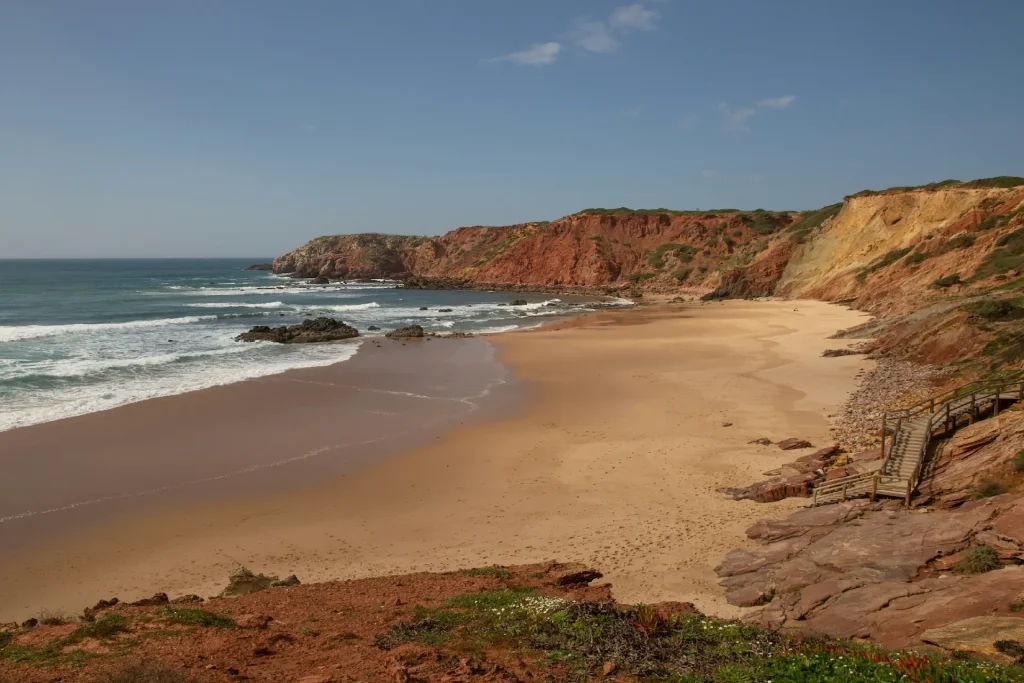
Live authentic experiences along the coast of Portugal
Each of these regions offers unique experiences: private boat trips on the Ria de Aveiro, vinho verde wine tastings in Minho, hiking trails on the Rota Vicentina, or surfing with local instructors on iconic beaches. A private trip along the coast of Portugal allows you to get to know the country in a genuine way, combining quality, sharing with the local community, and contact with nature and culture.
With the support of an agency specializing in tailor-made trips, such as SóPraSi, you can explore Portugal in comfort and exclusivity, accompanied by passionate and enthusiastic local guides, quality accommodation, and experiences designed according to your tastes.
From the Atlantic landscapes of Minho to the tranquil waters of Ria Formosa, each stage reveals a new facet of the country, made up of history, culture, and sea.